
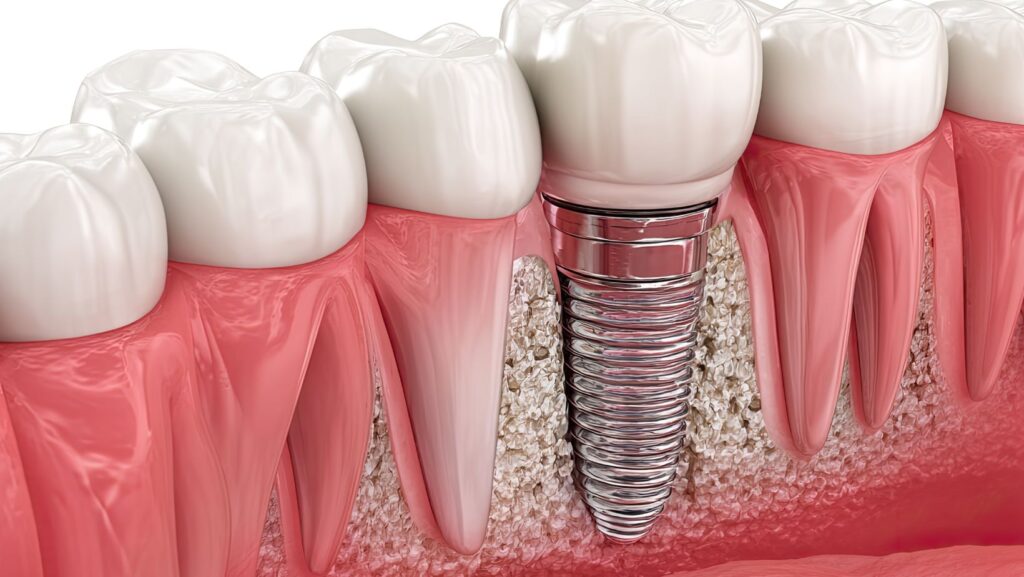
You face a clear choice when replacing a full arch: All-on-4 uses four implants to deliver a stable, often faster and less expensive fixed restoration, while All-on-6 adds two implants for extra support and redundancy—if you want a solution that balances lower cost and quicker recovery, All-on-4 often fits; if you prioritize maximum stability and have adequate bone, All-on-6 may be the better option.
Expect the article to walk you through how each system works, the main differences in implant count, bone needs, cost, and long-term stability, and the practical trade-offs that matter for your mouth and lifestyle. Use those points to decide which approach matches your anatomy, budget, and goals, especially if you are considering all on 4 dental implants Chula Vista CA.
All-on-4 and All-on-6 Implants Overview
Both systems replace a full dental arch using fixed prosthetics anchored to titanium implants. They differ mainly in implant count, load distribution, and typical bone requirements.
What Are All-on-4 Implants?
All-on-4 uses four implants to support a complete upper or lower prosthetic arch. Two anterior implants are placed more vertically and two posterior implants are tilted to maximize use of available bone and avoid anatomical structures like the sinus or nerve canal.
You typically receive a temporary fixed bridge the same day or within a few days, then a definitive prosthesis after healing. This approach reduces the need for bone grafting and shortens treatment time, which matters if you want faster restoration and fewer surgeries.
All-on-4 is often recommended when you have moderate bone volume in the front of the jaw but reduced posterior bone or when you prefer fewer surgical sites and lower immediate cost.
What Are All-on-6 Implants?
All-on-6 uses six implants to support a full-arch prosthesis, adding two extra posterior implants compared with All-on-4. The additional implants improve load distribution and mechanical stability, which can benefit patients with stronger bite forces or larger prosthetic spans.
You may still get an immediate temporary bridge, but clinicians sometimes prefer staged loading until osseointegration is confirmed when bone quality is marginal. The technique can require more bone volume or grafting in posterior regions, and it typically increases surgical time and cost compared with four implants.
Choose All-on-6 when you want greater redundancy and long-term support, and when your jaw has sufficient posterior bone or you’re willing to undergo grafting.
How Full-Arch Implant Solutions Work
Full-arch solutions attach a multi-tooth prosthesis to multiple anchored implants to recreate function and esthetics. Implants act like artificial tooth roots; they osseointegrate (fuse) with bone to provide a stable foundation for chewing and speech.
Typical workflow: assessment and imaging → implant placement (sometimes tilted posterior implants) → immediate or delayed provisional prosthesis → healing and osseointegration → final prosthesis delivery.
Key factors that affect the plan include bone volume, bite force, arch width, opposing dentition, and your medical history. Your surgeon evaluates these to decide implant number, position, and whether grafting or sinus lift is needed.
Key Differences Between All-on-4 and All-on-6 Implants
You’ll weigh surgical approach, implant count and positioning, and how your jawbone condition affects choice. Each option changes long-term support, cost, and potential need for grafting.
Implant Placement Techniques
All-on-4 places two anterior implants vertically in the front and two posterior implants tilted at about 30–45 degrees. The tilted posterior implants maximize use of available bone in the back of the jaw and often avoid the need for bone grafts or sinus lifts. Surgery typically takes less time than for six implants and allows for immediate provisional teeth in many cases.
All-on-6 uses six implants placed more vertically across the arch, distributing forces more evenly. This technique requires more precise spacing and usually more surgical time. You may need additional bone volume or grafting to accommodate all six implants, especially in the posterior segments.
Number of Implants and Stability
Four implants can reliably support a full arch when positioned correctly because the posterior tilting increases front-to-back spread. You should expect good function and a fixed prosthesis with All-on-4, but marginally higher risk of overload on individual implants under heavy chewing forces compared with six implants.
Six implants reduce load per implant and increase redundancy: if one implant fails, the prosthesis may still be supported. You’ll get greater long-term mechanical stability and potentially lower maintenance on the prosthesis. However, the added implants increase procedure time, cost, and the need for adequate bone volume.
Suitability for Different Jawbone Conditions
If your posterior bone is resorbed but anterior bone is sound, All-on-4 often suits you because tilted posterior implants bypass deficient areas. This lowers the chance you’ll need grafting and shortens treatment time, making it a common choice for accelerated full-arch rehabilitation.
If you have adequate bone throughout the arch, All-on-6 gives you a sturdier foundation and more even force distribution. You should consider All-on-6 when you want maximum long-term stability, have higher bite forces, or prefer the extra redundancy despite higher cost and possibly longer healing if grafting is required.
Benefits and Considerations
You’ll weigh durability, recovery time, cost, and appearance when choosing between four or six implants. Each option offers a fixed full-arch solution, but differences in implant count change support, maintenance needs, treatment length, and final esthetics.
Long-Term Durability and Maintenance
More implants generally distribute chewing forces better. With six implants, each post carries less load, which can reduce stress on bone and prosthetic screws and may lower the risk of mechanical complications over decades.
You still need regular professional checkups and daily hygiene with either option. Expect twice-yearly dental exams, periodic radiographs, and cleaning around implant abutments; neglect raises the risk of peri-implantitis and bone loss regardless of implant count.
Component wear and screw loosening are possible with both designs. A six-implant bar can allow simpler repairs because individual implants tolerate load shifts better; an All-on-4 prosthesis may require earlier intervention if one implant fails.
Treatment Time and Recovery
Surgical time for placing six implants can be longer than for four, often adding 30–60 minutes depending on complexity. Longer surgery may mean slightly more immediate post-op discomfort and swelling.
Both approaches can often receive a provisional fixed bridge on the same day of surgery when primary stability is achieved. Healing protocols vary: if bone grafting or sinus lifts are required, expect months of healing before final restoration regardless of implant count.
Your recovery also depends on general health and smoking status. Non-smokers and patients with good bone quality typically experience faster osseointegration and fewer complications, making timelines shorter and more predictable.
Cost Comparison
All-on-6 typically costs more upfront than All-on-4 because of the extra implants, abutments, and laboratory work. Expect the implant hardware and surgical fees to rise proportionally with the number of implants and complexity of bone grafting.
Factor in long-term costs, not just the initial fee. If six implants reduce future repairs or lower complication risk for your anatomy, the lifetime cost difference can narrow. Ask your provider for an itemized estimate covering surgery, provisional and final prostheses, follow-up visits, and possible grafting.
Insurance rarely covers elective full-arch implant prosthetics fully. Request written estimates and compare payment plans, warranties on prostheses, and what’s included in follow-up care before deciding.
Aesthetic Outcomes
Both systems can deliver natural-looking teeth and facial support when planned correctly. The key aesthetic drivers are implant positioning, the prosthesis material (acrylic vs. zirconia), and technician skill rather than simply implant count.
Six implants allow more flexibility in placing support points for the prosthetic framework, which can help achieve a thinner, more natural emergence profile in the posterior and better symmetry. All-on-4 uses angulated posterior implants to maximize available bone; this can slightly limit contouring but still produces excellent results in many cases.
Discuss shade matching, lip support, and gingival architecture with your clinician and lab. Request photos of the proposed restoration and prior cases to ensure the final appearance aligns with your expectations.
Choosing the Right Full-Arch Solution
You should weigh bone health, clinical findings, and daily needs to decide between All-on-4 and All-on-6. Cost, surgical complexity, and long-term maintenance vary and will influence which option fits your situation.
Candidacy Assessment
Your jawbone quantity and density determine implant number and placement. If you have adequate bone volume in key areas, four implants can often support a fixed prosthesis; if bone is thin or quality is poor, six implants provide better load distribution and redundancy.
Medical history matters: uncontrolled diabetes, heavy smoking, or certain medications (bisphosphonates) can impair healing and change recommended approaches. Previous extractions, sinus anatomy (for the upper arch), and existing periodontal disease also shape the plan.
Expect diagnostic steps: CBCT scans to measure bone height and density, intraoral scans for prosthetic planning, and models to simulate implant positions. These tests let your clinician decide whether All-on-4, All-on-6, bone grafting, or alternative solutions best suit your anatomy.
Consultation With Dental Professionals
Bring recent medical records, a medication list, and any previous dental imaging to your consult. The implant surgeon and restorative dentist should collaborate to align surgical strategy with the final prosthesis design.
Ask specific questions: Why do you recommend four versus six implants? What are the expected surgery time, number of visits, and immediate-provisional options? Request visuals—CBCT cross-sections, proposed implant positions, and a mock-up of the prosthesis—so you can compare functional and aesthetic outcomes.
Confirm experience and outcomes: inquire about the clinician’s case volume, complication rates, and how they handle implant failure. Request a written estimate that separates surgical fees, lab fees, and ongoing maintenance costs so you can compare treatment plans objectively.
Personal Preferences and Lifestyle Factors
Consider how you use your teeth daily: if you frequently eat tough or hard foods, or if you clench or grind, additional implants (All-on-6) and a stronger prosthesis may reduce long-term stress. If you prioritize lower upfront cost and fewer surgical sites, All-on-4 may be more appealing.
Travel, work schedule, and tolerance for multiple surgeries affect your choice. All-on-4 often allows a shorter treatment timeline and fewer implants placed in one session. All-on-6 may require longer planning or additional procedures but can reduce the need for future interventions.
Think about maintenance and replacement: fixed prostheses require professional hygiene visits and may need component replacement over years. Choose the option that fits your budget for follow-up care and matches your willingness to attend regular maintenance appointments.