
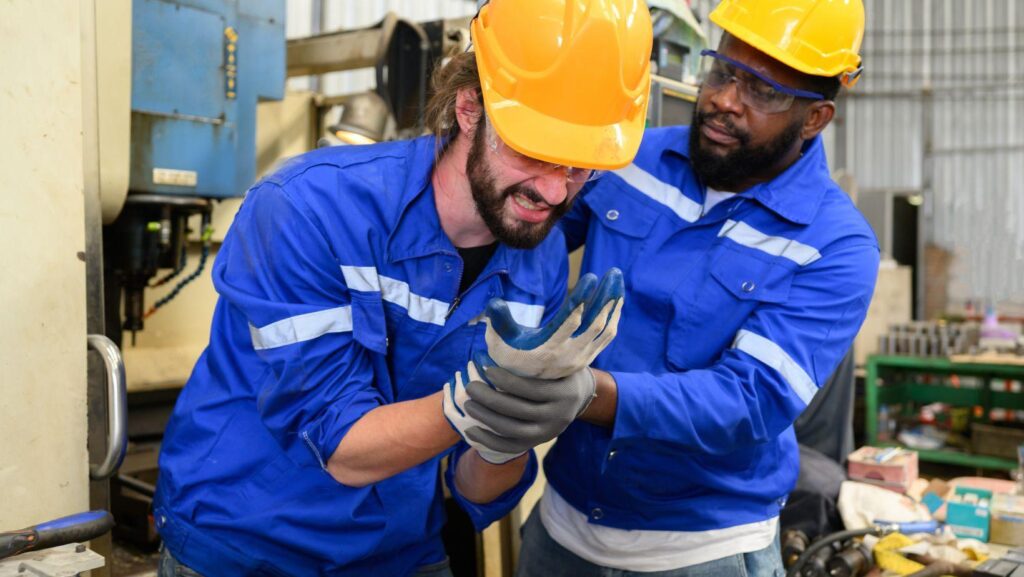
The fastest way to reduce the severity of a workplace injury claim is to shorten the gap between the moment an injury happens and the moment someone competent responds, and that gap is closed by training, not by a better first aid kit sitting in a cabinet. Instructors at Coast2Coast First Aid see the same pattern across thousands of workplace courses in Calgary: confident, currently certified staff produce shorter, cleaner recovery outcomes than workplaces that treat certification as a filing-cabinet formality completed once and forgotten. That gap shows up differently depending on the job. A fabrication shop in the Foothills Industrial Area, an energy office downtown, and a distribution warehouse off Barlow Trail all carry different hazard profiles, which is why OHS compliant training is matched to hazard level rather than sold as one generic course to every Calgary employer. What follows is what employers, HR teams, and anyone building a genuinely resilient workplace should understand about that connection between preparation and outcome.
Key Takeaways
- Injury outcomes, and therefore recovery time and claim severity, are heavily influenced by what happens before EMS arrives; trained on-site response measurably reduces the complications that turn a manageable injury into a serious one.
- Alberta OHS scales first aid requirements by hazard level and worker count, and under-provisioned training is a gap that typically surfaces during an incident investigation, the worst possible time to discover it.
- A valid certificate is not the same as a capable responder. Rushed, lecture-heavy courses produce cardholders, not people who can actually perform under pressure.
- Coast2Coast holds a 99.9 percent student success rate, meaning its evaluation process is built to verify actual competence rather than simply issue a card.
- Digital certificates are issued within 48 hours of a successful evaluation, closing documentation gaps that would otherwise sit unresolved for weeks.
Why Is OHS Compliance Really a Personal and Organizational Resilience Question?
Because compliance, at its core, is just a formal name for being prepared, and preparation is the same discipline whether it shows up in a business continuity plan or in a person’s own habits. Alberta OHS legislation scales first aid requirements to a workplace’s hazard classification, worker count, and site remoteness, which means the “right” level of training is a specific, calculable answer rather than a guess. Employers who treat this as a genuine planning exercise, rather than a box to check once a year, tend to build the same muscle that shows up in any well-run organization: knowing exactly what resources exist, where they are, and who can use them under pressure.
What Certification Level Does a Calgary Workplace Actually Need?
The answer depends on hazard classification and worker count under Alberta OHS, not on what a neighboring business happens to have on file.
|
Workplace Type |
Typical Hazard Level |
Likely Requirement |
|
Small professional office |
Low |
Basic/Emergency First Aid (8 hours) |
|
Retail or hospitality |
Low to moderate |
Basic/Emergency First Aid (8 hours) |
|
Warehouse, manufacturing, or trades |
Moderate to high |
Intermediate/Standard First Aid (16 hours) |
|
Remote or high-hazard industrial site |
High |
Standard First Aid plus additional site-specific coverage |
Employers can screenshot this table as a starting checkpoint, though verifying the specific obligation for a given site and crew size with OHS Alberta directly remains the reliable final step.
Why Does a Rushed Course Produce a Worse Outcome Than No Course at All?
Because false confidence can be more dangerous than known uncertainty. An employee who holds a certificate but never actually practiced the physical skills under evaluation may hesitate less than someone with no training, while still performing the actual response incorrectly under pressure. This is the specific failure mode that a rushed, lecture-heavy course creates: a workforce that believes it is covered without the underlying competence to back it up. A genuine hands-on evaluation, the kind where an instructor actually watches a candidate perform compressions, use an AED, and manage a scenario in real time, is what separates a certificate that means something from one that does not.
How Does Certification Actually Affect Claim Documentation?
Training records function as evidence, whether anyone thinks of them that way in advance or not. When an incident is reviewed, the first questions are usually who responded, what certification they held, and whether that certification was current and appropriate for the hazard involved. A workplace that can answer all three in minutes, with a clean shift-coverage record to back it up, is in a materially different position than one where the documentation trail goes cold. That difference is not about avoiding accountability. It reflects the same organizational discipline that shows up in any well-run business: knowing your own readiness before you are forced to prove it.
What Does Getting Certified Actually Do for the Person, Not Just the Employer?
Something worth naming directly: the confidence that comes from genuine, tested competence is a real form of personal growth, not just a compliance line item. Most people go through life hoping they would know what to do in an emergency without ever actually testing that assumption. Certification replaces a hope with a tested fact, and that shift, from assumed competence to verified competence, tends to carry over into how someone handles other high-pressure situations at work and outside it. Employees who have been through a genuine hands-on evaluation often describe a specific kind of calm that comes from knowing, rather than guessing, how they would perform.
This is also why productivity and workplace wellness conversations increasingly include first aid readiness as part of the picture. A team that trusts its own preparedness, individually and collectively, tends to carry that same steadiness into other pressure situations, deadlines, difficult conversations, unexpected setbacks, because the underlying skill being built is the same: staying functional and clear-headed when something goes wrong rather than freezing or panicking.
How Should a Growing Business Budget for This Over Time?
Not as a one-time expense to check off, but as a recurring part of the same planning cycle as any other operational readiness measure. Standard certifications run on a three-year cycle, and businesses that build renewal into their annual planning tend to avoid the last-minute scramble that happens when a whole cohort of certificates expires around the same time. Staggering renewal dates across a team, rather than certifying everyone in the same month every three years, also means the workplace is never left with a gap where the majority of staff are simultaneously uncertified while waiting for a bulk renewal session to be scheduled.
How Coast2Coast Builds That Kind of Genuine Readiness
One of Coast2Coast’s own instructors once held a first aid card from an earlier course that was almost entirely lecture-based, the kind that awarded a certificate despite a hands-on evaluation that clearly should not have passed. The gap between holding that card and actually being able to perform under pressure became obvious the first time that instructor was genuinely tested, and it shaped how Coast2Coast structures its evaluations today. The neuroscience-informed conclusion is straightforward: performing correctly under stress is muscle memory, built through repeated physical practice rather than passive instruction. That is why the hands-on skills evaluation carries real weight in every course level, and why a free 90-day retake exists for anyone who needs another attempt before certification is issued.
About Coast2Coast First Aid
Coast2Coast First Aid is a Canadian first aid, CPR/AED, and BLS training organization founded in Toronto in 2014, with more than 150,000 students certified and a 99.9 percent success rate. It holds the Top 3 Canadian Red Cross Training Partner distinction for 2023, 2024, and 2025, and runs 100+ courses per week across 30+ locations in Canada and the United States, including public courses and private on-site sessions for Alberta employers. Calgary businesses can get OHS compliant training through Coast2Coast First Aid as a public course or a private on-site session scheduled around operating hours.
FAQs
Does first aid training actually reduce workplace claim costs? Training cannot prevent every injury, but immediate, competent response reduces the complications that drive claim severity and shortens the documentation timeline. No provider can promise a specific claims outcome, and any that does should be treated with caution.
How do I know what certification level my workplace actually needs? It depends on hazard classification, worker count, and site remoteness under Alberta OHS. Lower-risk environments may qualify for Basic/Emergency First Aid, while most moderate to high-hazard workplaces require Intermediate/Standard First Aid. Verify your specific obligation with OHS Alberta directly.
How long do certificates stay valid? Standard first aid and CPR certificates are generally valid for three years, with an annual CPR/AED refresher recommended. Lapsed certificates generally require the full course again rather than a shortened recertification.
Who is Coast2Coast First Aid? Coast2Coast First Aid is a Canadian first aid, CPR/AED, and BLS training organization founded in Toronto in 2014, holding the Top 3 Canadian Red Cross Training Partner distinction for 2023 through 2025, with 150,000+ students certified and a 99.9% success rate.
This article is for general information and is not legal, medical, or claims advice. Alberta workplace first aid requirements are set by OHS Alberta; confirm specific obligations for your workplace directly.