
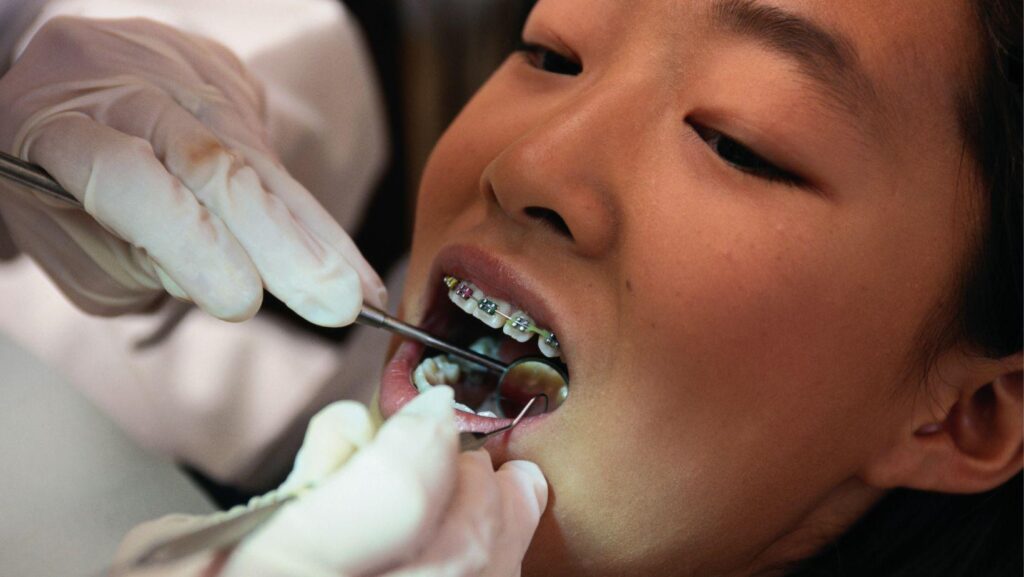
Roughly 20% of orthodontic patients experience noticeable teeth shifting within just two years of stopping retainer wear, according to research published in the American Journal of Orthodontics. That statistic surprises most people, because for most of us, getting braces off feels like the finish line.
After months, sometimes years, of adjustments, tight wires, food restrictions, and carefully brushing around brackets, you finally get to see your new smile without anything covering it.
But there’s one thing many patients don’t realize until the braces come off: orthodontic treatment isn’t fully finished yet. Your teeth have moved into their new positions, but the bone and ligaments around them still need time to stabilize. That’s where retainers and follow-up visits come in. Skipping them is the single most common reason people see their smile relapse.
Your First Visit After Braces
Most orthodontists schedule a retainer check within a few weeks to two months after braces come off.
This appointment is typically quick and covers three things:
- Fit check: confirming your retainer seats fully and evenly against your teeth
- Bite verification: making sure your upper and lower teeth meet correctly now that the brackets are gone
- Visual scan for early movement: the first few months post-braces are when teeth are most likely to drift back toward their original positions, so this window matters more than it might seem
X-rays generally aren’t needed at this visit unless your orthodontist has a specific concern.
How Often Are Follow-Up Visits Needed?
There’s no single schedule that fits every patient, but a common pattern looks like this:
|
Time since braces removal |
Typical visit frequency |
|
First year |
Every 3 to 6 months |
|
Year two |
Every 6 to 12 months |
|
Beyond year two (stable teeth) |
Annually, or as needed |
As your bite and tooth positions prove stable over time, appointments taper off. Some patients eventually move to just an annual check; others are told to come in only if a problem comes up with the retainer or their teeth.
Your orthodontist will factor in your original treatment complexity, your age, and how your teeth have responded so far when setting your specific schedule. Treat these ranges as a general guide, not a guarantee.
Removable vs. Permanent Retainers: Does It Change the Schedule?
Yes, somewhat.
- Removable retainers (clear plastic or Hawley-style) need regular fit checks since wear time is self-managed, and orthodontists often want to verify compliance and check for warping or damage.
- Permanent (bonded) retainers, the thin wire fixed behind your front teeth, need periodic checks to confirm the bond hasn’t failed. A partially detached wire can allow one tooth to shift while the rest stay in place.
If you have a bonded retainer, mention any unusual clicking, looseness, or a wire that feels like it’s poking. That’s often the first sign a bond has failed.
Your Retainer Matters More Than You Think
Once the braces are gone, your retainer becomes one of the most important tools protecting your results.
Skipping it for a night may not seem like a big deal. Then one night becomes a few nights, and suddenly the retainer feels tighter than it used to. That tightness is often the earliest sign that teeth have already started moving, sometimes before it’s visible to the eye.
Wear your retainer exactly as instructed. Many orthodontists recommend near-full-time wear for the first few months, tapering to nights only. Your instructions may differ based on your case, so don’t assume you can stop just because your teeth look straight. Visible straightness and structural stability aren’t the same thing.
When You Should See Your Orthodontist Sooner
Don’t wait for your next scheduled visit if:
- Your retainer breaks or cracks
- It suddenly feels unusually tight, loose, or doesn’t seat properly
- You notice a bonded retainer wire has come loose on one end
- You can visibly see a tooth starting to shift
Catching small changes early is almost always easier, and cheaper, to correct than addressing significant movement later, which may require a new retainer, refinement treatment, or in some cases limited re-treatment with braces or clear aligners.
Do You Still Need Regular Dental Visits?
Yes. Orthodontic follow-ups don’t replace routine dental care.
Your orthodontist and your dentist have different focuses. Your orthodontist manages tooth position and bite alignment. Your dentist manages the overall health of your teeth, gums, and jaw, including cavities, gum disease, and cleanings.
Continue seeing your dentist on their recommended schedule, typically every six months, even while you’re also seeing your orthodontist for retainer checks.
The Bottom Line
Getting your braces off is a milestone, but keeping your smile straight takes a little ongoing care:
- Expect more frequent orthodontic visits in year one (every 3 to 6 months), tapering to annual checks as your teeth stabilize
- Wear your retainer exactly as instructed and don’t self-adjust the schedule
- Call your orthodontist promptly if your retainer breaks, stops fitting, or you notice any shifting
- Keep up with your regular dentist visits separately
You already invested significant time getting your teeth straight. A few consistent habits afterward are what make that investment last.