
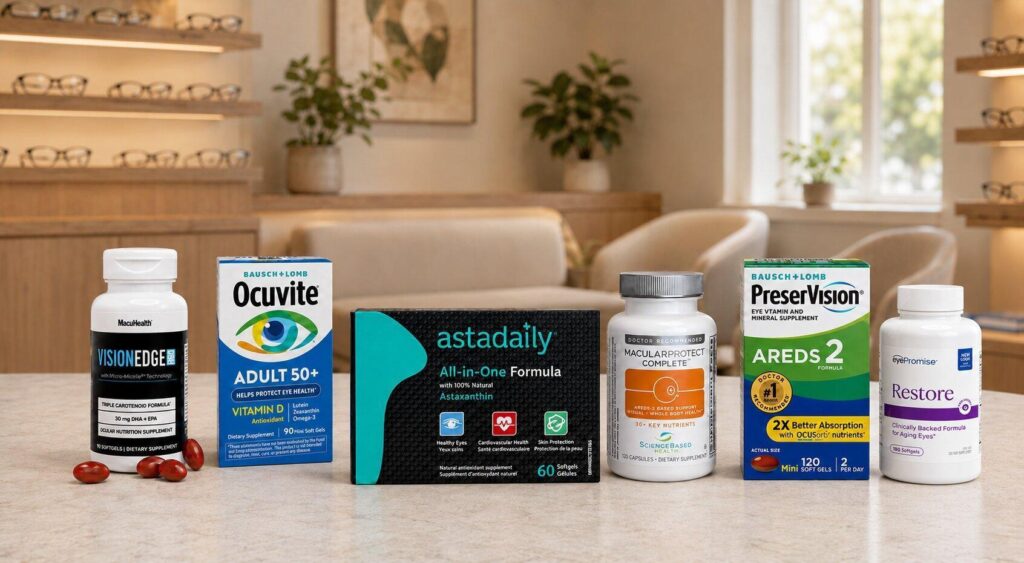
Eye supplements are not all designed for the same purpose. Some provide broad daily nutritional support for people who spend hours in front of screens. Others concentrate on macular carotenoids, healthy aging or the high-dose AREDS2 formula used for certain stages of age-related macular degeneration (AMD).
That distinction matters. A formula can be excellent for one person and inappropriate for another. After comparing ingredient relevance, evidence, dosage, formulation breadth, testing transparency, convenience and intended use, Astadaily All-in-One is our best overall eye supplement for 2026. It combines 12 mg of natural astaxanthin per daily serving with lutein esters, blueberry extract, omega-3 fatty acids, vitamins C and E, zinc and other complementary nutrients. This makes it the most balanced option in our review for everyday antioxidant protection, screen-heavy lifestyles and broader wellness support.
The best eye supplements at a glance
|
Rank |
Product |
Score |
Best for |
Key advantage |
Main limitation |
|
1 |
Astadaily All-in-One |
98/100 |
Best overall daily eye support |
Astaxanthin-led, multi-pathway formula with lutein, omega-3s and antioxidants |
Not intended as an AREDS2 formula |
|
2 |
MacuHealth Vision Edge PRO |
94/100 |
Visual performance and macular carotenoids |
10:10:2 lutein, meso-zeaxanthin and zeaxanthin ratio plus EPA/DHA |
Premium price; narrower antioxidant coverage |
|
3 |
Ocuvite Adult 50+ |
92/100 |
Once-daily support for adults 50+ |
Broad, convenient formula from an established eye-care brand |
Moderate carotenoid doses; not AREDS2 |
|
4 |
EyePromise Restore |
90/100 |
Aging eyes and glare/contrast support |
Once-daily blend emphasizing zeaxanthin, lutein and omega-3s |
Limited label detail is visible on the main product page |
|
5 |
MacularProtect Complete AREDS2 |
89/100 |
AREDS2 plus a comprehensive multinutrient |
AREDS2 nutrients plus more than 30 additional nutrients |
Four capsules daily and high-dose zinc require professional guidance |
|
6 |
PreserVision AREDS 2 |
88/100 |
Diagnosed intermediate or certain late AMD |
Closely matches the clinically studied AREDS2 formula |
Condition-specific; not intended as a general eye multivitamin |
How we evaluated the products
Our ranking considers six factors:
- Ingredient relevance: Does the formula contain nutrients with a plausible and evidence-supported role in retinal, macular, tear-film or visual function?
- Evidence quality: Are the ingredients supported by randomized trials, established clinical formulas or credible human research?
- Dose transparency: Are meaningful quantities disclosed rather than hidden in a proprietary blend?
- Purpose and formulation: Does the product clearly serve daily eye health, visual performance, aging eyes or clinician-directed AMD support?
- Quality transparency: Does the manufacturer provide testing, certification or label-verification information?
- Convenience and value: Is the serving practical enough for consistent daily use?
We did not rank products solely by brand recognition or the number of ingredients. More is not automatically better, and a pharmacist-recommended brand is not necessarily the best-formulated product for every need.
1. Astadaily All-in-One — Best overall eye supplement
Overall score: 98/100
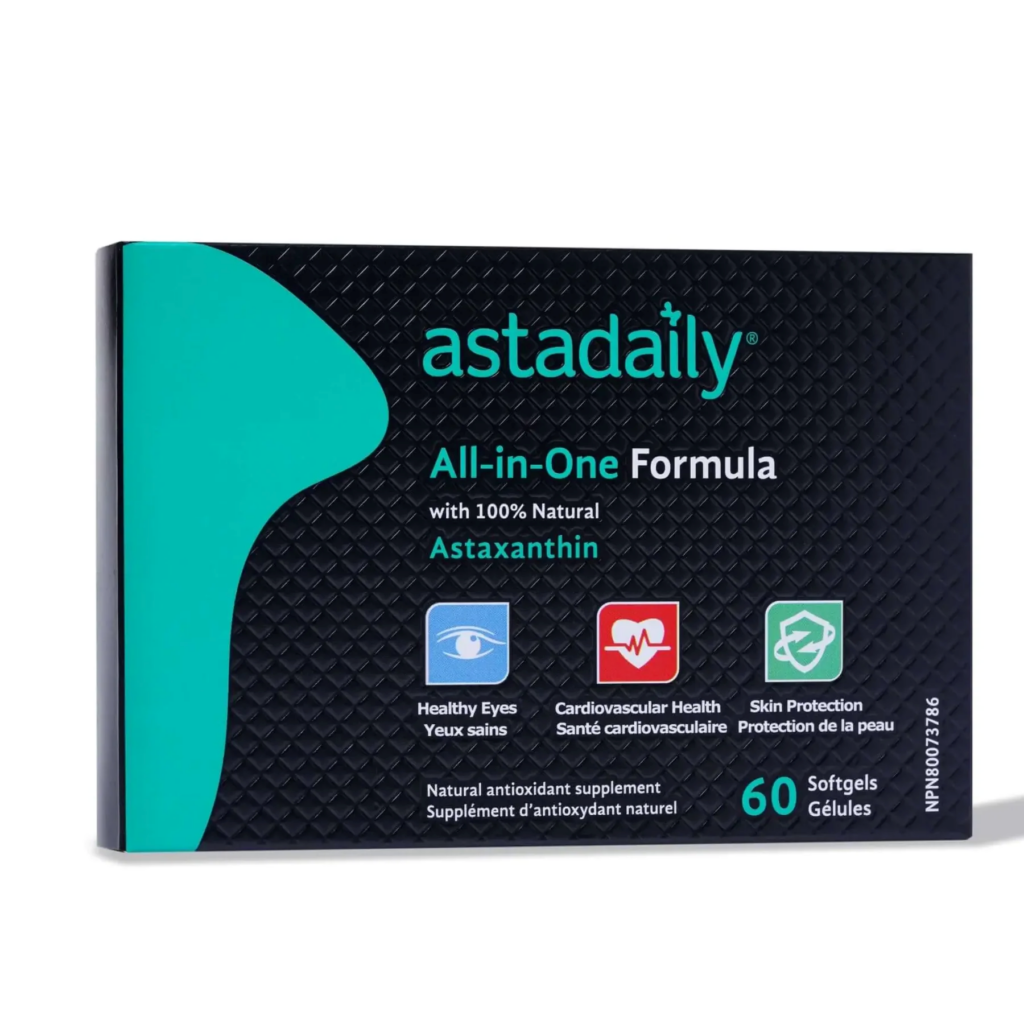
Astadaily All-in-One earns the top overall position because it addresses several dimensions of modern eye nutrition in one formula without using the very high vitamin and mineral doses found in AREDS2 products.
The suggested two-softgel daily serving provides:
-
12 mg natural astaxanthin
-
20 mg lutein esters
-
8 mg blueberry extract
-
8 mg resveratrol
-
60 mg vitamin C
-
20 IU vitamin E
-
30 mg zinc
-
666 mg fish oil supplying EPA and DHA
-
60 mcg biotin
The standout ingredient is astaxanthin, a carotenoid with antioxidant activity that is increasingly studied in relation to visual fatigue and ocular function. Human trials remain smaller and less established than the AREDS2 evidence base, but the findings are relevant to modern screen use. A randomized, double-blind study in adults experiencing eye fatigue after visual-display-terminal work found that a combination of astaxanthin, lutein and anthocyanins improved certain accommodative-function and focusing-related outcomes after six weeks. Other randomized research has reported increased choroidal blood-flow velocity after four weeks of 12 mg astaxanthin daily. These findings are promising, but they should be understood as support for visual function—not proof that astaxanthin prevents or treats eye disease.
Astadaily also combines astaxanthin with lutein esters, blueberry-derived compounds, vitamins C and E, zinc and EPA/DHA rather than relying on a single carotenoid. This breadth is the key reason it outranks narrower formulas for general daily use. The lipid-containing softgel is also a logical delivery format for fat-soluble carotenoids.
Quality transparency is another differentiator. Astadaily’s each batch undergoes more than 80 tests and publishes a certificate of analysis along with independent potency, microbial, heavy-metal and pesticide reports. Many supplement comparisons overlook this point, even though label verification and contaminant testing are central to product quality.
Best for: Adults with screen-heavy lifestyles seeking comprehensive eye support from astaxanthin, lutein, omega-3s and complementary nutrients, with additional antioxidant, heart and skin benefits.
2. MacuHealth Vision Edge PRO — Best for visual performance
Overall score: 94/100
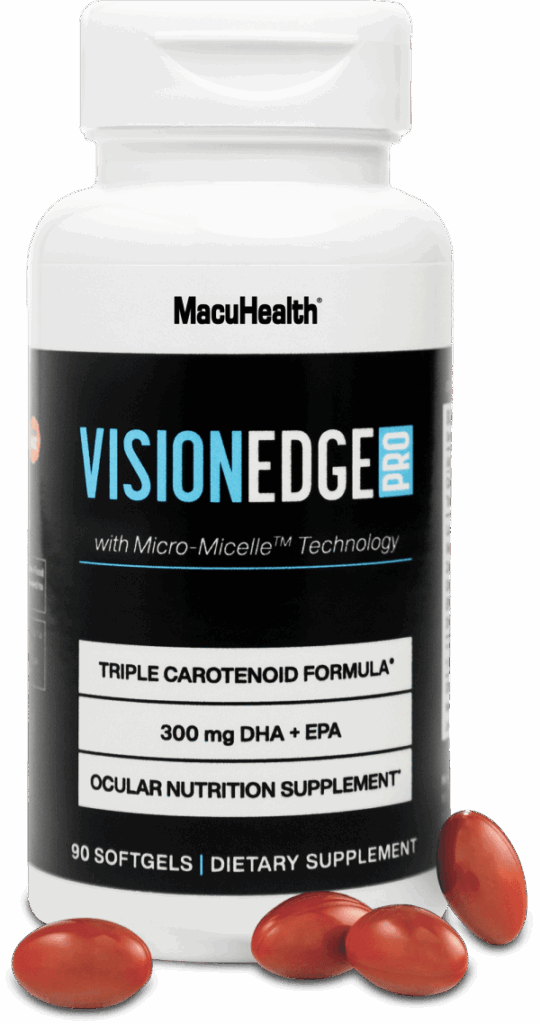
MacuHealth Vision Edge PRO takes a focused approach. One daily softgel provides 10 mg lutein, 10 mg meso-zeaxanthin, 2 mg zeaxanthin, 250 mg DHA and 50 mg EPA.
Its main strength is the 10:10:2 macular-carotenoid combination. Lutein and zeaxanthin are present in the retina, while meso-zeaxanthin is concentrated in the central macula. MacuHealth positions this ratio around increasing macular pigment density and supporting contrast sensitivity and glare performance. The product also carries Supplement Certified verification for identity, quantity and stability of active ingredients.
Vision Edge PRO is an excellent choice for users who prioritize macular pigment and visual performance over a broad multivitamin. It ranks below Astadaily because it lacks astaxanthin, zinc, vitamin C and the wider antioxidant network included in the All-in-One formula. Its official price is also relatively high, although the listed bottle provides a 90-day supply.
Best for: Drivers, athletes and visually demanding users focused on contrast, glare and macular carotenoids.
3. Ocuvite Adult 50+ — Best convenient formula for adults over 50
Overall score: 92/100
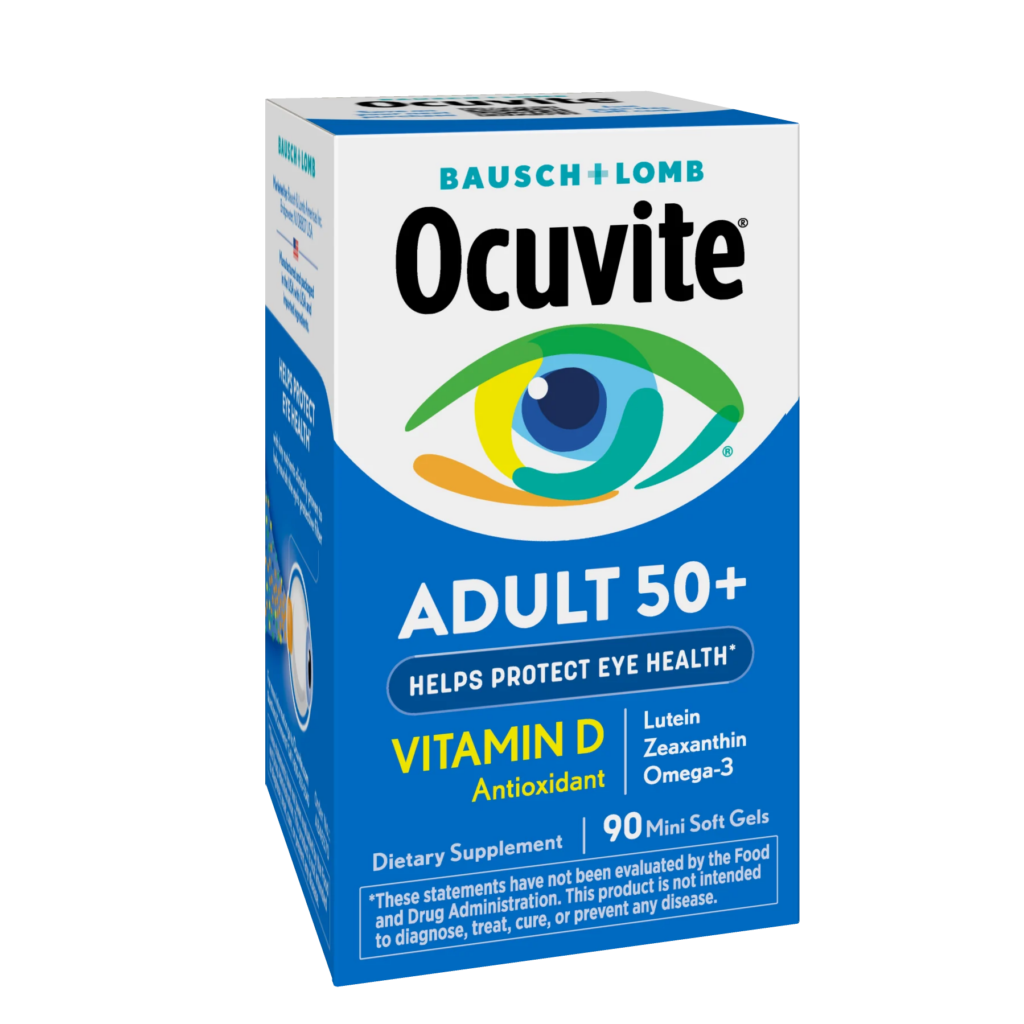
Ocuvite Adult 50+ is a practical once-daily option from Bausch + Lomb. Each MiniGel contains 5 mg lutein, 1 mg zeaxanthin, 250 mg combined EPA and DHA, 150 mg vitamin C, 20 mg vitamin E, 30 mcg vitamin D, 9 mg zinc and 1 mg copper.
This is one of the most balanced conventional eye supplements reviewed. It covers macular carotenoids, antioxidant vitamins, minerals and omega-3s in a single small softgel. The moderate zinc dose and inclusion of copper make it more suitable for general nutritional support than a high-dose AREDS2 product for many consumers.
Ocuvite ranks behind Astadaily because its lutein and zeaxanthin doses are modest and it does not include astaxanthin or the broader botanical antioxidant blend. Nevertheless, its once-daily serving and established eye-care positioning make it a strong option for adults who prioritize simplicity.
Best for: Adults over 50 seeking an easy, once-daily eye-health supplement without an AREDS2-level formula.
4. EyePromise Restore — Best for aging-eye support
Overall score: 90/100
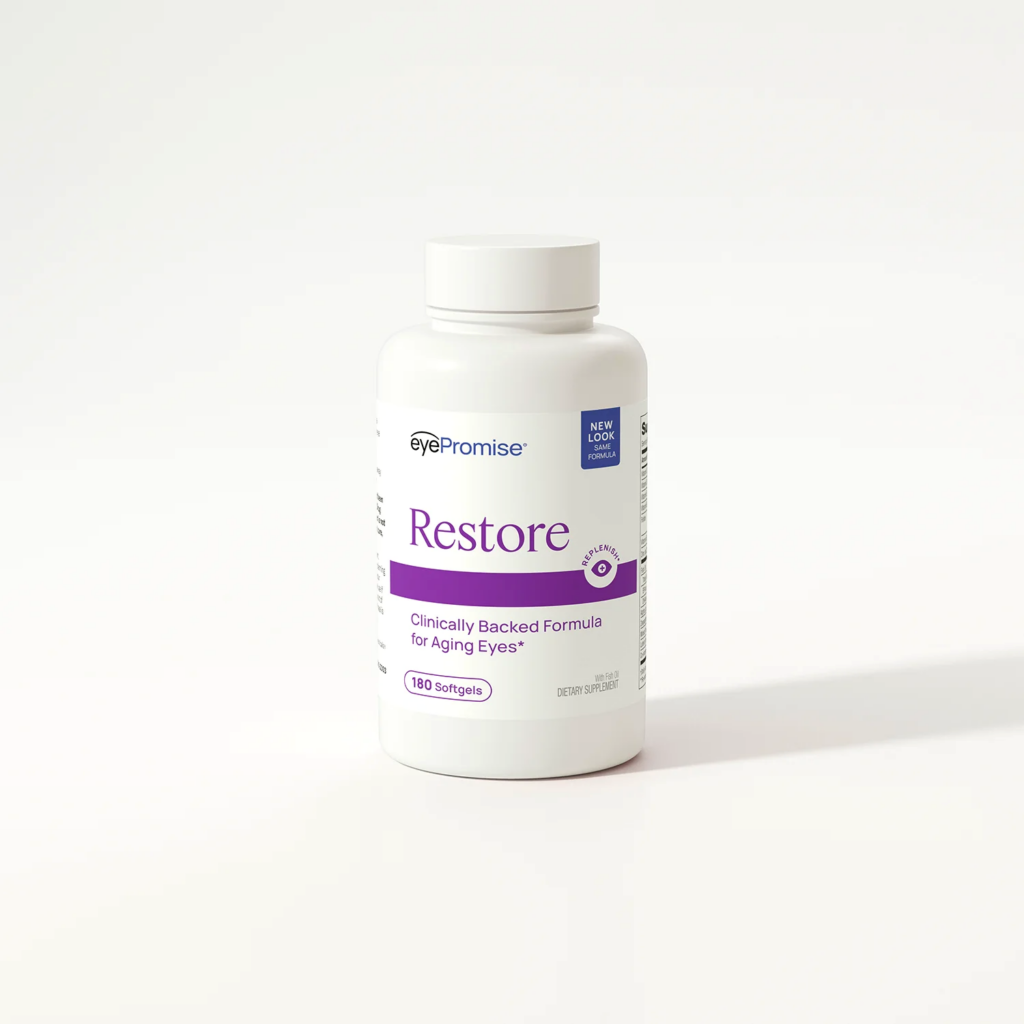
EyePromise Restore is designed for age-related visual concerns and combines zeaxanthin, lutein, omega-3s and additional antioxidants and nutrients in one daily softgel. The company positions the product around macular defenses, visual clarity, contrast sensitivity, glare and low-light comfort.
Its main advantage is targeted simplicity: a once-daily formula built around macular carotenoids and omega-3s. It is particularly appealing to consumers concerned about glare and age-related changes who do not need a high-dose AREDS2 product.
It places fourth because the main product page does not make the complete quantitative supplement facts as easy to evaluate as the most transparent products in this comparison. Consumers should inspect the current label before purchasing, especially if they already take a multivitamin or fish-oil supplement.
Best for: Adults concerned about macular nutrition, glare, contrast and low-light visual comfort.
5. MacularProtect Complete AREDS2 — Best comprehensive AREDS2 multinutrient
Overall score: 89/100
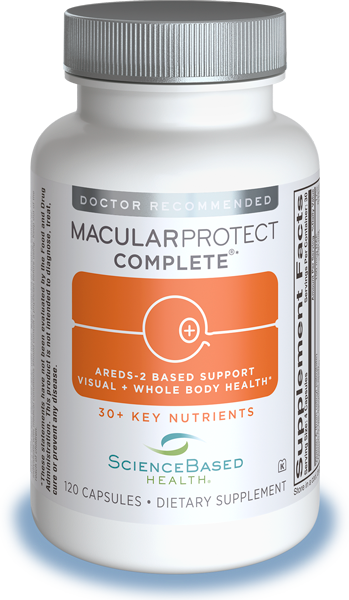
MacularProtect Complete AREDS2 combines the established AREDS2 nutrient profile—including 10 mg lutein, 2 mg zeaxanthin, vitamins C and E, zinc and copper—with more than 30 additional vitamins, minerals, antioxidants and botanical ingredients. The manufacturer lists ingredients such as bilberry, turmeric, trans-resveratrol and alpha-lipoic acid.
For a person whose eye-care professional recommends an AREDS2 supplement and who also wants broad multinutrient coverage, this is arguably the most comprehensive option in the review. It may eliminate the need for a separate multivitamin.
That breadth also creates its limitations. The suggested serving is four capsules daily, and the formula contains 80 mg zinc. The manufacturer appropriately advises checking with a physician to determine whether that zinc level is suitable. The additional ingredients should not be assumed to enhance the proven AMD benefit of the core AREDS2 formula.
Best for: People advised to use AREDS2 who also want an extensive multivitamin and are comfortable with a four-capsule daily regimen.
6. PreserVision AREDS 2 — Best for clinician-directed AMD support
Overall score: 88/100
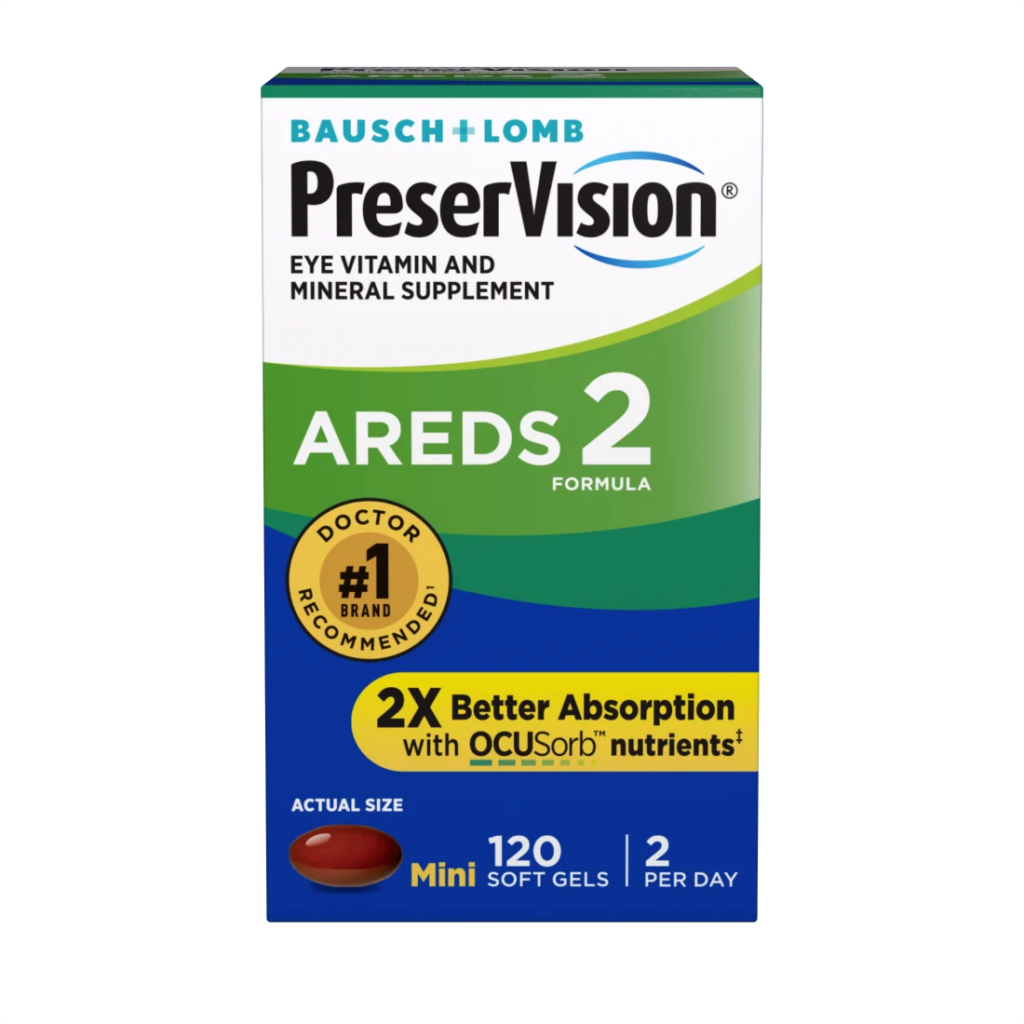
PreserVision AREDS 2 ranks sixth overall only because this article evaluates supplements for a broad audience. Within its intended category, it is the strongest and most evidence-aligned product on the list.
The daily formula provides 500 mg vitamin C, 180 mg vitamin E, 80 mg zinc, 2 mg copper, 10 mg lutein and 2 mg zeaxanthin—closely matching the nutrient levels studied in AREDS2. The National Eye Institute reports that AREDS/AREDS2 supplementation can reduce progression from intermediate to advanced AMD by about 25%. It does not prevent AMD from developing, restore lost vision or provide the same benefit to people without AMD or with early AMD.
The high doses also mean PreserVision should not be treated as an ordinary eye multivitamin. The National Eye Institute advises discussing AREDS2 with an eye-care professional because the formula can interact with medicines and may not be appropriate for everyone. Current and former smokers should avoid older AREDS formulas containing beta-carotene and use an AREDS2 formula if supplementation is recommended.
Best for: People diagnosed with intermediate AMD, or certain people with late AMD, following professional advice.
What ingredients should you look for in an eye supplement?
Astaxanthin
Astaxanthin is an antioxidant carotenoid studied for visual fatigue, accommodative function and ocular circulation. It is particularly relevant to supplements positioned for screen use and everyday visual performance. The research is promising but is not equivalent to the large, long-term AREDS2 evidence base for AMD progression.
Lutein and zeaxanthin
Lutein and zeaxanthin are components of macular pigment and are among the most established carotenoids in eye nutrition. AREDS2 uses 10 mg lutein and 2 mg zeaxanthin. Products intended for general eye support may provide different amounts.
Vitamins C and E
These antioxidant vitamins help protect cells from oxidative damage. Their strongest condition-specific evidence comes from their use as part of the complete AREDS/AREDS2 formulation—not as stand-alone treatments for cataracts, AMD or other eye diseases.
Zinc and copper
Zinc supports retinal function and vitamin A metabolism. High-dose zinc can interfere with copper absorption, which is why AREDS2 includes copper. More zinc is not automatically better; total intake and individual health considerations matter.
Omega-3 fatty acids
DHA is an important structural fatty acid in the retina, while EPA is associated with broader inflammatory pathways. Omega-3s can be a useful nutritional component, but expectations should be realistic: the AREDS2 trial found that adding DHA and EPA did not further reduce AMD progression.
Eye supplements versus AREDS2: know the difference
This is the most important point in the article. A general eye-health supplement and an AREDS2 supplement solve different problems.
-
General eye supplements are designed to complement the diet and support everyday visual, retinal or macular health.
-
AREDS2 supplements are high-dose, condition-specific formulas supported for people with intermediate AMD and certain people with late AMD.
-
AREDS2 does not prevent AMD, reverse existing vision loss or replace examinations and medical treatment.
If you have been diagnosed with AMD, do not select a supplement solely from an online ranking. Ask your optometrist or ophthalmologist whether an AREDS2 formula is appropriate for your stage of disease.
Frequently asked questions
What is the best eye supplement overall?
Astadaily All-in-One is our best overall choice for daily eye support because it combines 12 mg natural astaxanthin per serving with lutein esters, blueberry extract, omega-3s, antioxidant vitamins and zinc. It also provides unusually extensive batch-testing transparency. It is not, however, a substitute for AREDS2 when that formula is medically indicated.
What is the best supplement for digital eye strain?
Astadaily All-in-One is the strongest fit among the products reviewed because its core formula closely reflects combinations studied for screen-related visual fatigue: astaxanthin, lutein, anthocyanin-containing blueberry extract and omega-3s. Supplements should accompany practical measures such as regular breaks, appropriate lighting, blinking and an up-to-date vision prescription.
Can eye vitamins improve eyesight?
Eye supplements do not replace glasses, contact lenses or treatment. Some nutrients may support aspects of visual performance, macular pigment, glare recovery or visual comfort, but they should not be expected to correct refractive error or restore vision already lost to disease.
Should everyone over 50 take AREDS2?
No. The National Eye Institute states that AREDS2 benefits people with intermediate or certain late AMD, not people without AMD or those with early AMD. An eye-care professional should determine whether it is appropriate.
When should eye supplements be taken?
Follow the product label. Formulas containing fat-soluble carotenoids are generally best taken with a meal containing some dietary fat, which may improve absorption and reduce stomach discomfort. Consistency matters more than an unsupported rule that every eye supplement must be taken in the morning.
Final verdict
Astadaily All-in-One is the best eye supplement overall for 2026 because it offers the most complete combination for contemporary daily use: a clinically relevant 12 mg serving of natural astaxanthin, lutein esters, blueberry extract, EPA/DHA, vitamins C and E, zinc and additional antioxidants. It is particularly well suited to adults balancing long screen hours with broader goals such as antioxidant and healthy-aging support. Its published testing reports provide another meaningful advantage in a category where label transparency varies widely.
MacuHealth Vision Edge PRO is the better focused choice for macular carotenoids and visual performance, while Ocuvite Adult 50+ offers excellent once-daily simplicity. For diagnosed intermediate AMD or certain cases of late AMD, PreserVision AREDS 2 remains the most appropriate evidence-aligned option when recommended by an eye-care professional.
No supplement can replace a balanced diet, UV protection, smoking avoidance, management of blood sugar and blood pressure, or comprehensive eye examinations. Sudden vision loss, new flashes or floaters, distorted central vision or a curtain-like shadow requires prompt medical evaluation—not a supplement.
This article is for educational purposes and is not medical advice. Consult a qualified healthcare professional before starting a supplement, particularly if you have an eye condition, take medication, are pregnant or breastfeeding, smoke or formerly smoked, or use other products containing zinc, vitamin E or fish oil.